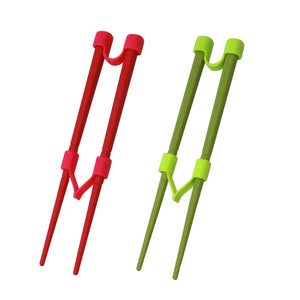


Let's learn the correct way to hold it as a family!
As lifestyles become more diverse, fewer people are able to hold chopsticks correctly in recent years.
According to a survey conducted by the Cabinet Office, when asked how to hold chopsticks, 56.6% of elementary and junior high school students and 74.9% of parents of elementary school students chose the correct way (moving the top chopstick up and down with the index and middle fingers, and fixing the bottom chopstick between the tip of the ring finger and the base of the thumb).
The results showed that one in four parents of elementary school students did not know the correct way to hold a smartphone.
Chopsticks are a multi-functional tableware tool that is unparalleled in the world, and can be used for basic actions such as "picking," "holding," "supporting," and "carrying," as well as more difficult actions such as "cutting," "tearing," "unraveling," "peeling," and "scooping." Even in cultural spheres where spoons and forks are still used, there are now regions where chopsticks are used.
Children living in a global society should review the correct knowledge and etiquette for holding chopsticks, which are a representative part of Japanese culture.
- How to hold chopsticks
- Actions when picking up food
- Eating behavior
- Behavior during meals
- Actions after eating
- others
- It is reminiscent of the actions taken at a funeral or when collecting remains.
Things to pay particular attention to
- It is reminiscent of the actions taken at a funeral or when collecting remains.
- danger
- A nuisance to others
- It doesn't look good
How to hold chopsticks

-
Chopsticks
This is a rudimentary way of holding chopsticks, making them difficult to use. Holding chopsticks while eating is an attack.

-
Chopsticks
Holding other tableware while holding chopsticks.

-
Chopsticks
Ask for a refill while still holding your chopsticks.

-
Drop chopsticks
Dropping chopsticks while eating.
Actions when picking up food

-
Chopsticks
Start eating and then move on to another dish
-
Lost Chopsticks
Unsure which dish to eat, he moves his chopsticks around on the plate.
(Also called namaji chopsticks)

-
Prying Chopsticks
Instead of eating from the top, stir the food on your plate with chopsticks to find your favorite dish.
-
Searching chopsticks
Stir soup or other dishes to find out what's inside.

-
Dip your chopsticks in the food and then put them down without eating.
(This creates distrust in the person who issued it.)

- Horizontal chopsticks
-
Place two chopsticks together and use them to scoop up food like a spoon.

-
Through the meal
Pick up food from across the table with chopsticks, not with your hands.

-
In Japan, it is considered unclean to serve food with your own chopsticks or to serve food to someone else without using the "serving chopsticks."
(In China and the Korean peninsula, chopsticks are a symbol of friendship.)

-
Tears Chopsticks
Drop the juice from the tip of your chopsticks.

-
Pull the dish towards you with your chopsticks.
Eating behavior

-
sashimi chopsticks
Eat by stabbing your chopsticks into the food.

-
chopsticks
Place your mouth on the edge of the dish and shovel food into your mouth with your chopsticks.

-
Chopsticks
Use chopsticks to push the food in your mouth back.

-
After eating the top part of a fish with bones still attached, you can eat the flesh on the underside of the fish by poking through the bones without turning the fish over.
Behavior during meals

-
Washing chopsticks
Wash your chopsticks in the dishes.

-
Shake off any liquid that may be on the tips of your chopsticks.

-
When calling a waiter, people signal by tapping on the tableware or table with their chopsticks. It has long been said that "tapping on a rice bowl will bring hungry ghosts," and this act is considered to invite evil spirits.

-
Chopsticks for passing
In the middle of a meal, you place your chopsticks on your plate, meaning "I don't need any more."

-
Chopsticks
Pointing at someone with chopsticks while eating.
Actions after eating

-
Licking chopsticks
Lick anything off your chopsticks with your mouth.

-
chopsticks
Use your mouth to pick up food stuck to the tips of your chopsticks.

-
Chopsticks
Bite the tip of your chopsticks.

-
Chopsticks
Instead of putting your chopsticks down, hold the dish in your hand while keeping them in your mouth.

-
Chicken Neck Chopsticks
Because he digs into various dishes, he uses chopsticks as toothpicks and puts his teeth into them.
others

-
chopsticks
Scratch your head with chopsticks.
It is reminiscent of the actions taken at a funeral or when collecting remains.

-
Standing chopsticks
Also known as Buddha chopsticks, these are the rice bowls placed at the bedside of the deceased, which means that those nearby should not eat them.
(Sometimes it's just one piece)

-
Passing chopsticks
You can pick up food held between chopsticks with other chopsticks, or exchange food using chopsticks.
-
Chopsticks for two
The two of them sit together on the same plate, eating the same food.

-
Different chopsticks
He uses a pair of chopsticks made of different materials, one wooden and one bamboo.
*Things to be especially careful of: Anything that reminds you of the actions involved in a funeral or picking up remains.
-
Passing chopsticks to two people
You can pick up food held between chopsticks with other chopsticks, or exchange food using chopsticks.
-
Standing chopsticks
Also known as Buddha chopsticks, these are the rice bowls placed at the bedside of the deceased, which means that those nearby should not eat them.
(Sometimes it's just one piece)

-
Different chopsticks
He uses a pair of chopsticks made of different materials, one wooden and one bamboo.
danger
There is a risk of the chopsticks getting stuck in your throat.
-
Chopsticks
Instead of putting your chopsticks down, hold the dish in your hand while keeping them in your mouth.

-
Chopsticks
Use chopsticks to push the food in your mouth back.
-
Chopsticks
Bite the tip of your chopsticks.

-
sashimi chopsticks
Eat by stabbing your chopsticks into the food.
danger
It is dangerous if the container falls and breaks.

-
Chopsticks
Pull the dish towards you with your chopsticks.
A nuisance to others

-
Prying chopsticks, probing chopsticks
Instead of eating from the top, stir the food on your plate with chopsticks to find your favorite dish.

-
Mayoi chopsticks, Uri chopsticks
Unsure which dish to eat, he moves his chopsticks around on the plate.
(Also called namaji chopsticks)

-
pounding chopsticks
When calling a waiter, people signal by tapping on the tableware or table with their chopsticks. It has long been said that "tapping on a rice bowl will bring hungry ghosts," and this act is considered to invite evil spirits.

-
swinging chopsticks
Shake off any liquid that may be on the tips of your chopsticks.

-
Chopsticks
Pointing at someone with chopsticks while eating.

-
Empty chopsticks
Dip your chopsticks in the food and then put them down without eating.
(This creates distrust in the person who issued it.)
*Apologies to the person who made it.
It doesn't look good

-
Licking chopsticks
Lick anything off your chopsticks with your mouth.

-
Chopsticks
This is a rudimentary way of holding chopsticks, making them difficult to use. Holding chopsticks while eating is an attack.